

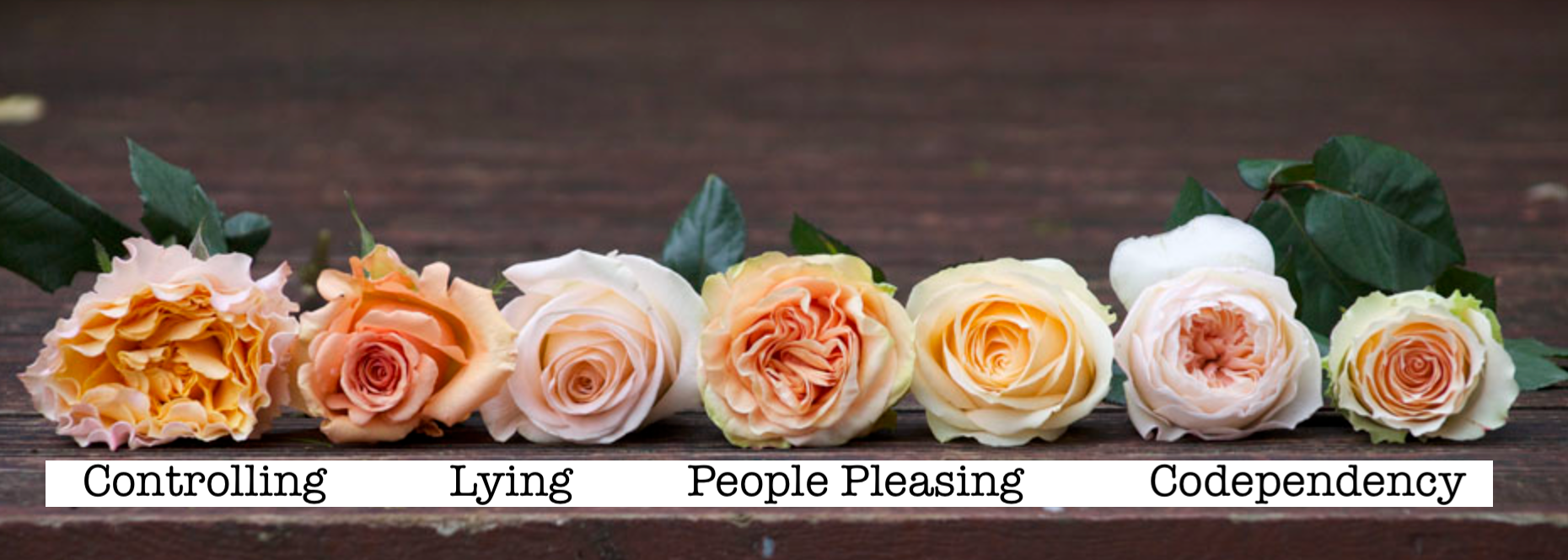
Shakespeare may have believed that roses by other names smelled as sweet but when it comes to the trauma response of fawning, grouping it together with words we commonly pathologize hides its true purpose.
This post is the second in a ten-part series on the fawn response and the process Ingrid Clayton, in her book Fawning: Why the Need to Please Makes us Lose Ourselves and How to Find our Way Back, calls “unfawning.”
Last week we defined fawning as “leaning all the way over” or centering another person, at the expense of our own personhood. We do this to survive relational encounters of disempowerment or maltreatment. Fawning can happen in as “small” of a moment as agreeing to a restaurant you don’t really like or laughing off a racial “joke” to not spoil the mood. But it can also occur in intense moments as well—like downplaying the pain when a remorseful partner apologizes for slapping you out of “frustration” or pretending to be into sex that you really don’t want to have but sense will happen with or without your enjoyment.
It’s not enough, though, to merely explain what fawning is, we must also identify what it isn’t. Otherwise, we miss the core intent behind important actions—to find personal safety. These four terms are often framed as personal problems like they originate out of thin air so if we don’t reconsider whether they could be an expression of fawning, we fail to see how they actually develop as adaptive coping mechanisms in dysfunctional environments of cultural, structural, familial and societal systems (p. 29).
Controlling:
Every day, straight off the bus with my house key on a lanyard, I walked through the door of my eerily quiet home and starting cleaning. I had a mental list of the key things to do to help the house look restful when my mom walked in the door. Vacuum the living room. Organize the stack of mail. Empty the dishwasher. Empty the ashtrays and wipe the end tables. Homework and school projects could wait until after dinner when no one cared how late I stayed up studying. The permission form I needed signed for a field trip, the practice schedule for volleyball season and the slip saying my lunch account balance was low would be annoying. But if when she walked in the door the house was tidy and she could go to her room to read and rest before dinner, then she would be in a much better mood when it came time for me to sprinkle my needs nonchalantly throughout the evening.
Controlling? Manipulative?
“While it’s true—we try to control because we feel so out of control—that doesn’t mean we are controlling. It means we’re afraid. We’re off-balance. We’re experiencing the effect of being disempowered.” (p. 80-81)
Lying:
What they don’t tell you about being a therapist in grad school is that “being lied to” comes with the territory. If you can’t move beyond feeling offended to look for the deeper meaning under a lie you’ll never learn to move past what is initially said or omitted. There is only one quote I remember from four years in a master program and it anchors me, almost daily, in my work.
“A lie would have no sense unless the truth were felt as dangerous.” ~ Alfred Adler
Whether it’s talking to parents of a middle school client, an adult who walks in and admits to exaggerating a story in our last session or someone who shares (years later mind you) a crucial detail that flips a story on its head, I’m always wondering about the purpose a lie served. What was it delaying? How was it trying to help? What truth was it seeking to communicate?
Clayton says it this way:
“When I use the word lie in the context of fawning, it’s not in the sense one might imagine, as in true or false, a binary, or a clear distinction between something that is honest and dishonest. With fawning, lying is like tucking pieces of ourselves and our experiences away. When we lie, it’s because we are trying to hide something sacred, something that isn’t safe in the world. Lying to ourselves and others has been a form of protection…lying to ourselves and others in fawning isn’t a moral indiscretion. And it’s rarely premeditated.” (p. 103)
Codependency:
If fawning ensured we survived relational unsafety growing up, it makes sense that its residue would show up most in our present day relationships. The protective instinct to function around others feelings, needs and desires as children means by the time we get to adulthood we are experts at caretaking in one form or another. And I’m not just talking about Enneagram 2s and women. I’m talking about all of us.
Often codependency is seen as selfishness or “a pathological need to be needed.” But what is truer is that it’s “a need to be safe, to belong, in a situation where healthy reciprocal relationships did not exist.” (p. 29)
When it feels tenuous, in the presence of another, to take care of ourselves, fear leads us to put the other “above ourselves” (sound familiar exvangelicals?) and come back to our needs later. How godly of us. Except it rarely works out that way when others aren’t capable of responsible, mutual care.
People Pleasing:
This final category is often seen as a shallow need to be liked or approved of, in essence to be popular. It carries the accusation of being image-focused rather than fawn’s focus on survival.
“Our behaviors might appear to be people-pleasing, but they aren’t about pleasing at all. The chronic fawner just wants to exist, as safely as possible, often while experiencing a host of complicated fearls such as fear, disgust or resentment.” (p. 28)
The decades I tolerated misogynistic policies working for Cru International would still baffle me to this day were it not for understanding the fawn response. In an organizational culture where community supports the lowest-common-denominator-approach towards mens’ comfort levels with women leading, it truly is the only way for a female to exist.
“Unpacking the nuances of fawning brings self-compassion and self-awareness and offers a path to…a right relationship with ourselves and others.” (p. 26)
Reflection:
In what seasons of life did you feel “convicted” of being controlling, lying/hiding, codependency and people pleasing? Can you name, for each one, the dysfunctional environment you were in and the safety you were seeking?
“Can you name, for each one, the dysfunctional environment you were in and the safety you were seeking?” - such a powerful question! Reframes it entirely and helps mitigate the shame.